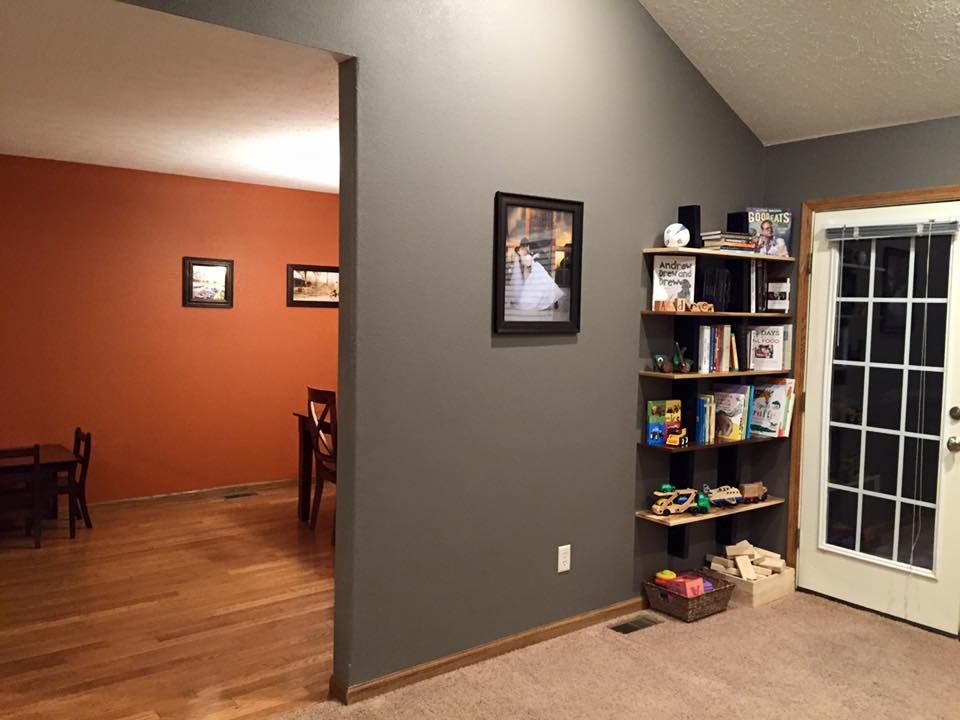
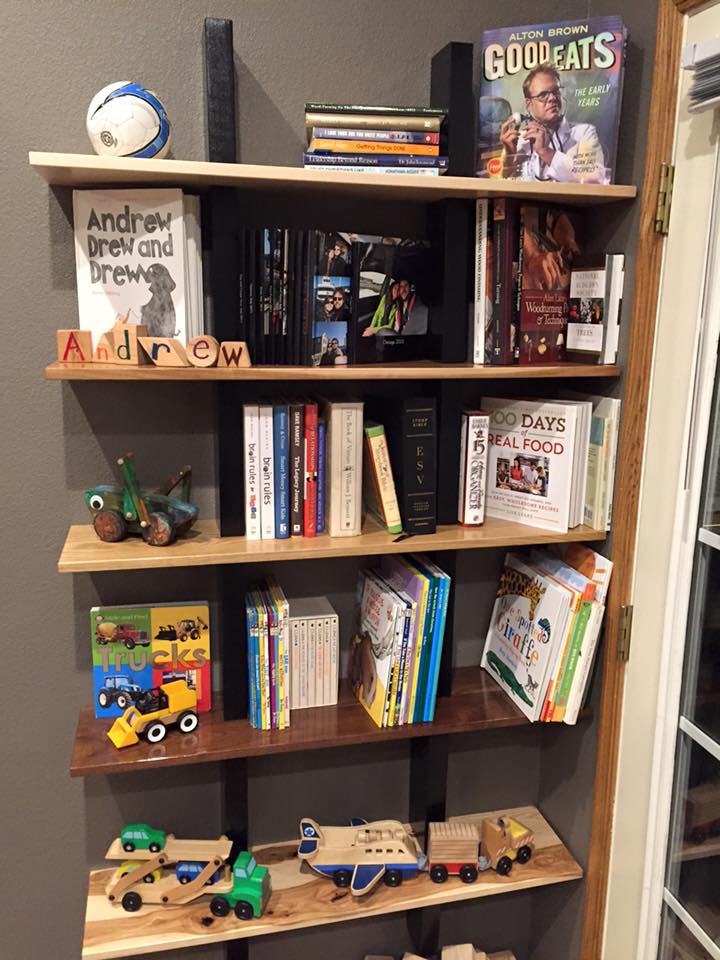
There’s one thing I can’t stand: that unused wall space where a door opens. The next few home projects involve reclaiming some of that space. In our house, a few spaces (such as this one) have 9 inches of depth… and 9" is plenty for some bookshelves.
Design considerations:
- Open shelving is a must. I wanted these shelves and their contents to feel like part of the room, rather than closing itself off from the room.
- I’m a sucker for subtle curves. They add extra steps but it’s totally worth it.
- Structural elements must be part of the design.
- Must be able to move this unit elsewhere. The design is based on 16" centers to be compatible and strong in many places of a home.
- No visible fasteners.
- Variety of wood species. Long term, a natural mix of wood species around the home.
- Hardest wood on bottom shelf — it’s kid-height and will take the most beating.
- Naturally supportive joinery. The shelves are not actually attached to the supports other than a resting friction fit.
The Useless Space
Tape marks the studs.

SketchUp drawing of my joinery plan.

Cutting Joinery Dadoes in Supports
For these upcoming dado crosscuts, I needed as little table friction as possible. So I waxed the saw & wing.
Problem: the wing was wavy, worn, and not very flat. Even when waxed, the contours caused too much friction.


So, I made a new wing.


Fun fact: Stacked dado blades, such as this one, are outlawed in the UK due to safety concerns.
Here, I’m creating a template for the curves.

Curves, dadoes cut into supports:


The Shelves
This is the absolute best burr I’ve ever put on a card scraper. If you’ve never used a card scraper, this is probably not impressive.
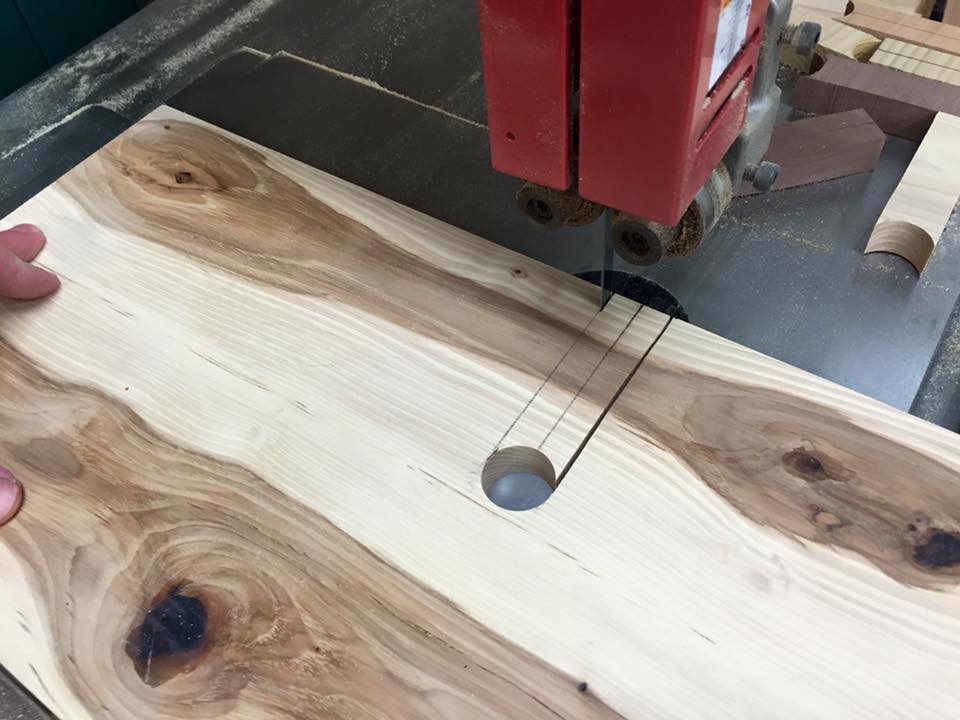


Time to make some curves. I rough cut them with the bandsaw, then clamped them together and cleaned them up with the spokeshave.

Black Gesso
This is my first time using the stuff. It’s intended to be used as a primer for canvas (Bob Ross used it) but the properties looked really promising for wood: handles wood movement, takes a finish well, texture can be added, quick drying, cures nice and hard.


Closeups of texture. This was simple. Wavy brush strokes.

Shelves Up Close
Pre-Finish: Before applying the water-borne finish, I applied two coats of 1lb cut dewaxed shellac. For practical purposes, this prevented the grain from raising when applying the water-borne Poly.
Two topcoats used:
- Varathane Water-Borne Poly (for Maple, Hickory)
- GF Enduro-Var Water-Borne Poly (for Walnut, Sassafras, Cherry)


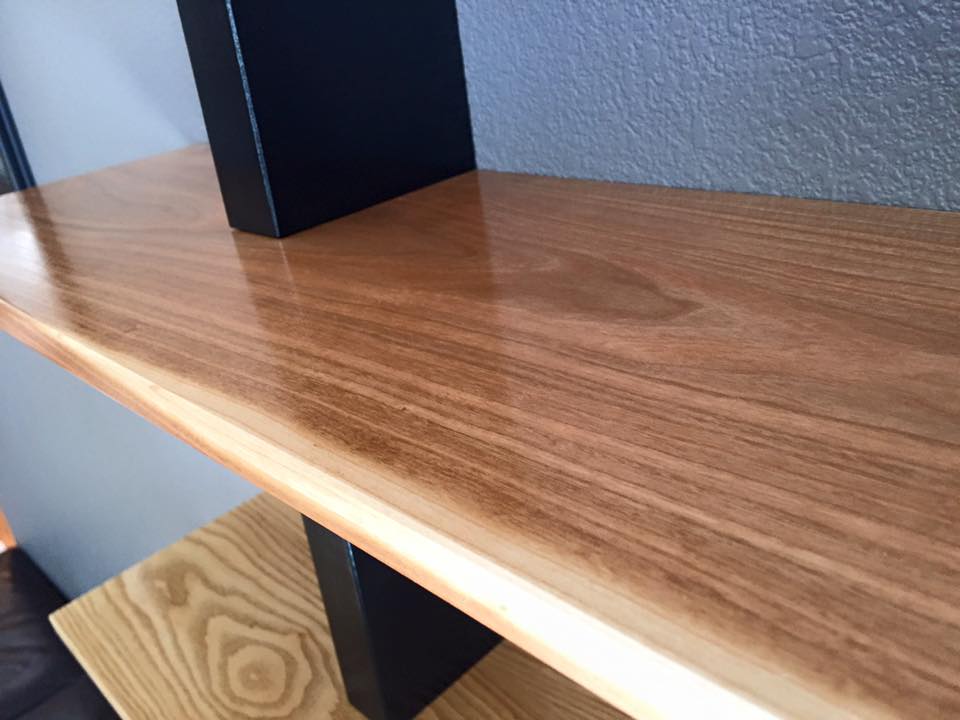
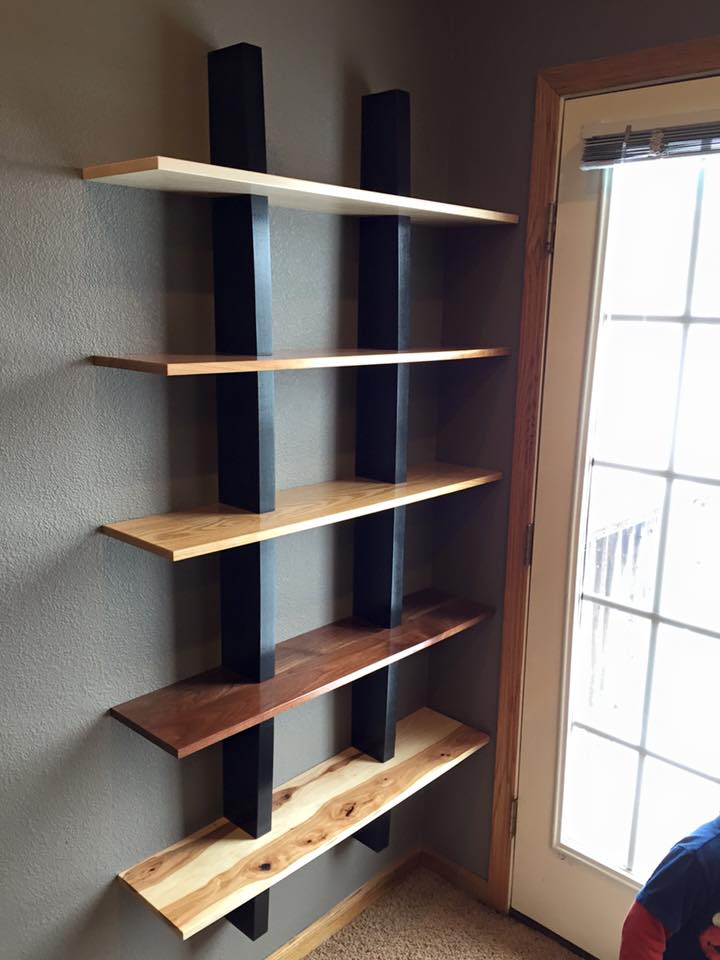
Consider it done. Because, well, it is.