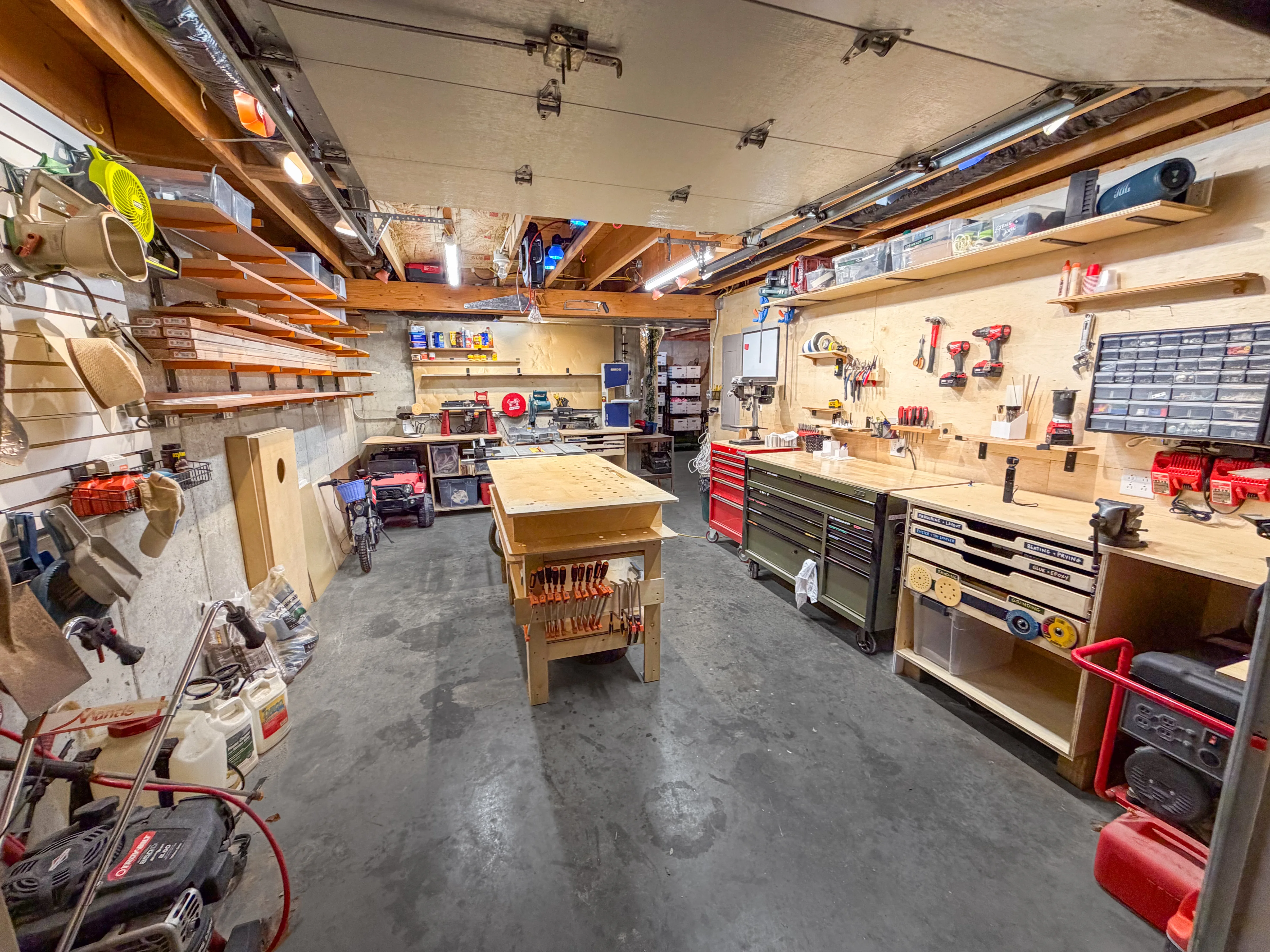
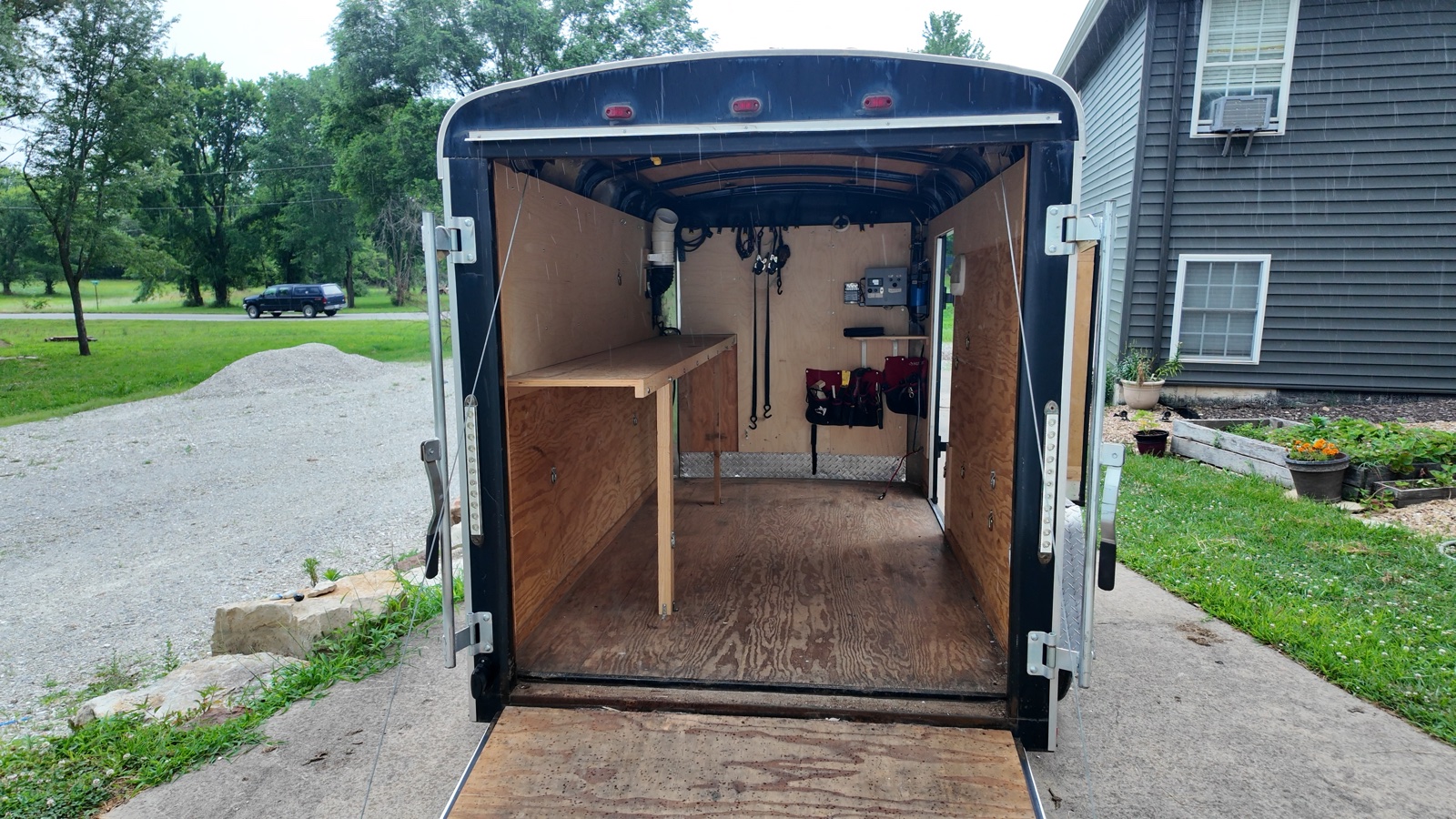
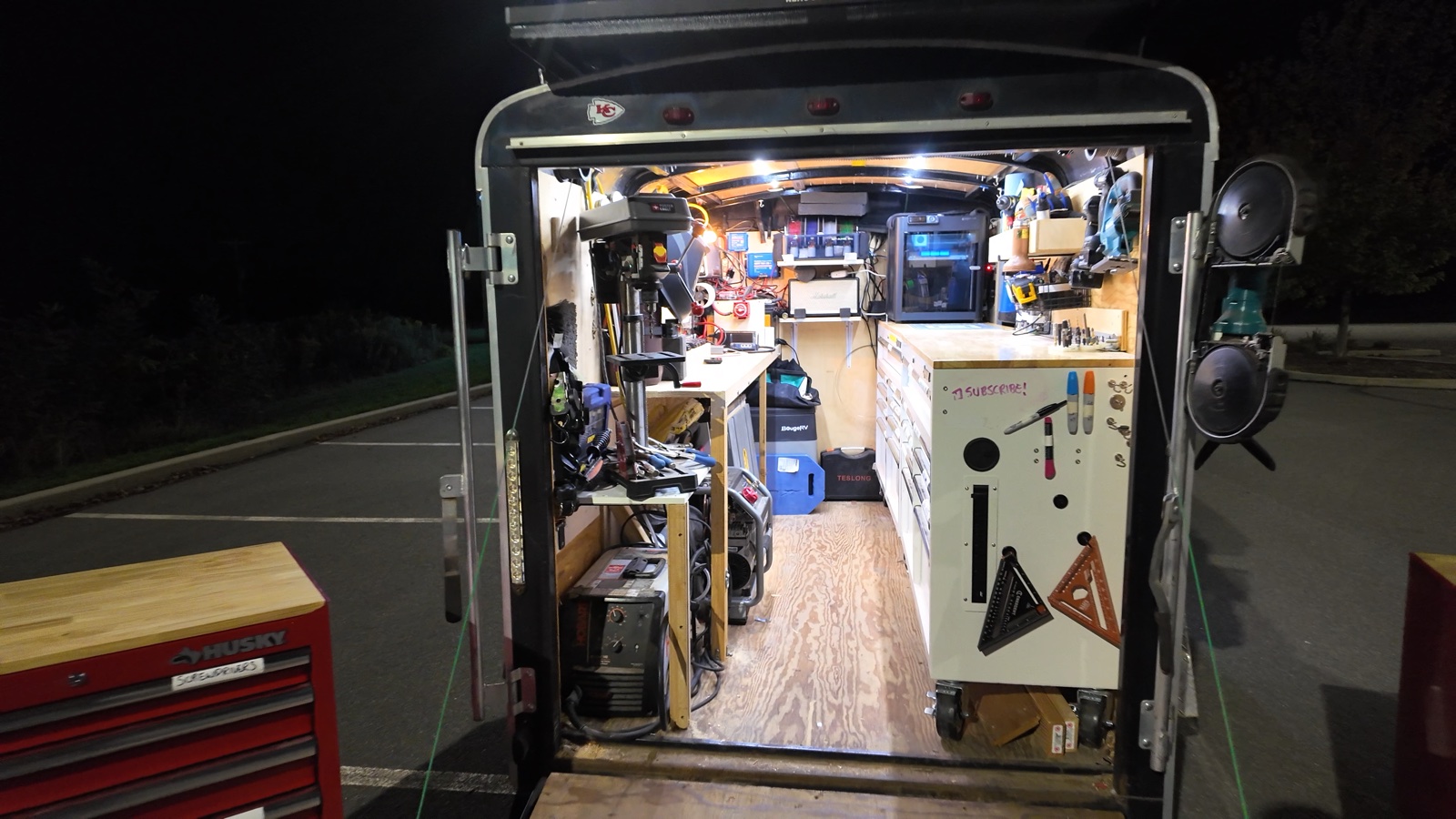
This custom workshop is
the length of an F-150.SuperCrew Short Bed ...with trailer hitch :)
...and the width of a highway lane.
Let’s do the impossible with your space$100 · A pair of Zoom calls with Keith
Workshop usability consulting
Tiny Space Maximalism
Hi, I’m Keith. Over a pair of Zoom calls, I’ll study you and your space, and help you find ways to maximize it.
- 01 Show me how you use your space.
- 02 I do some homework. We brainstorm.
- 03 Leave with ideas and clear next steps.

Wickedly Usable
Home Workshops
Brainstorming / Ideation: If you're already on a roll with your workshop, a simple brainstorm / devil's advocate session should be magical.
Coaching: Book a time-boxed set of sessions to meet, brainstorm, advise, and hold you accountable to progress throughout your workshop-overhaul sprint.
On-Site Iterative Overhaul: I drive my mobile workshop to you, and we make quick work of overhauling your workshop. Expensive, but it gets the job done quick. This lets us design/build iteratively, and helps you get through the tough decisions quickly.
The most effective solution will rely on studying you and your space, so book a call and that's where we'll start.
Book a Zoom callCohesive, Gridlock-Free
Multi-Function Garages
Defunct Garages: Let's figure out what's holding you back, and identify some relevant starting steps to make your garage work for you.
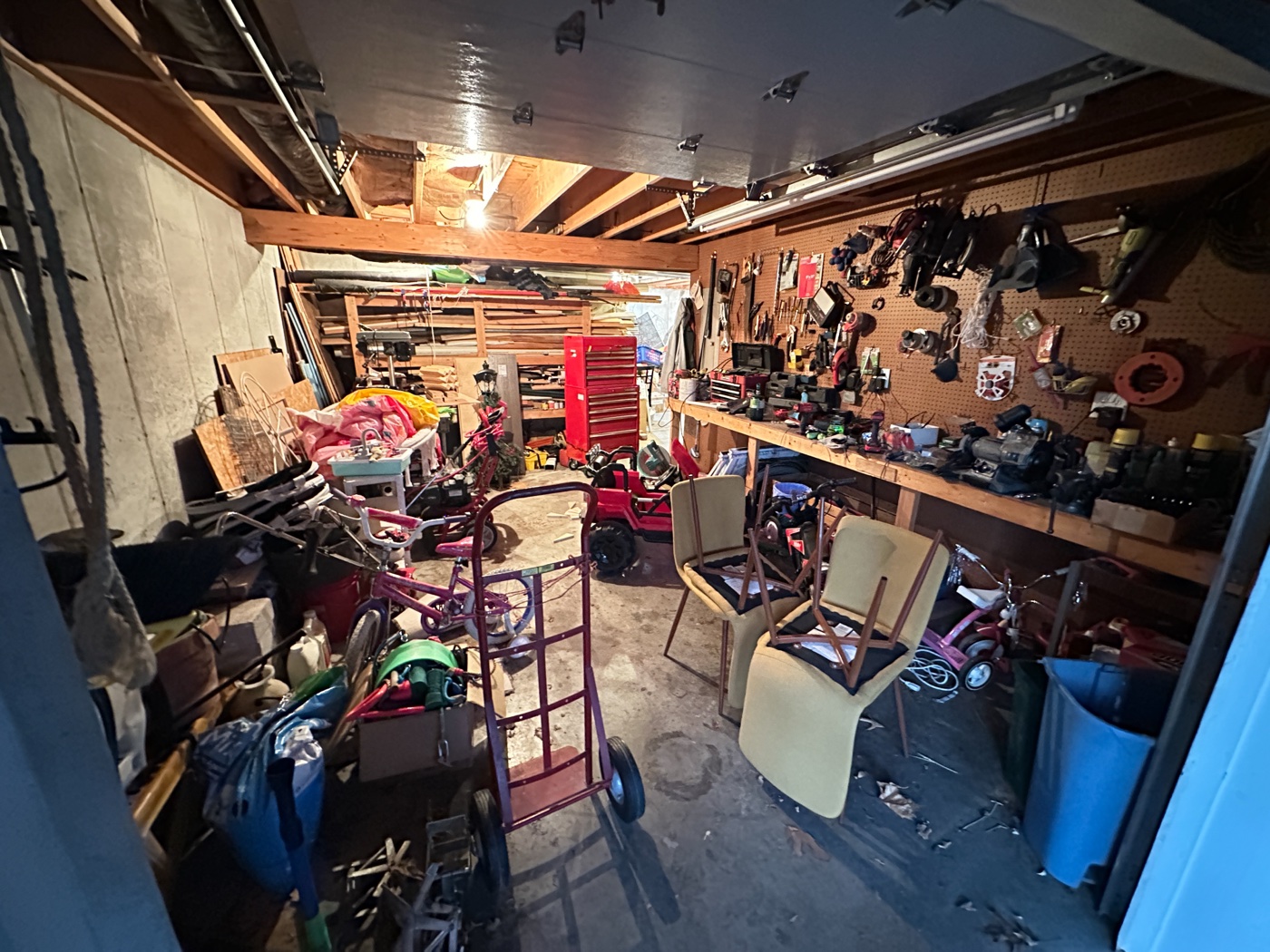
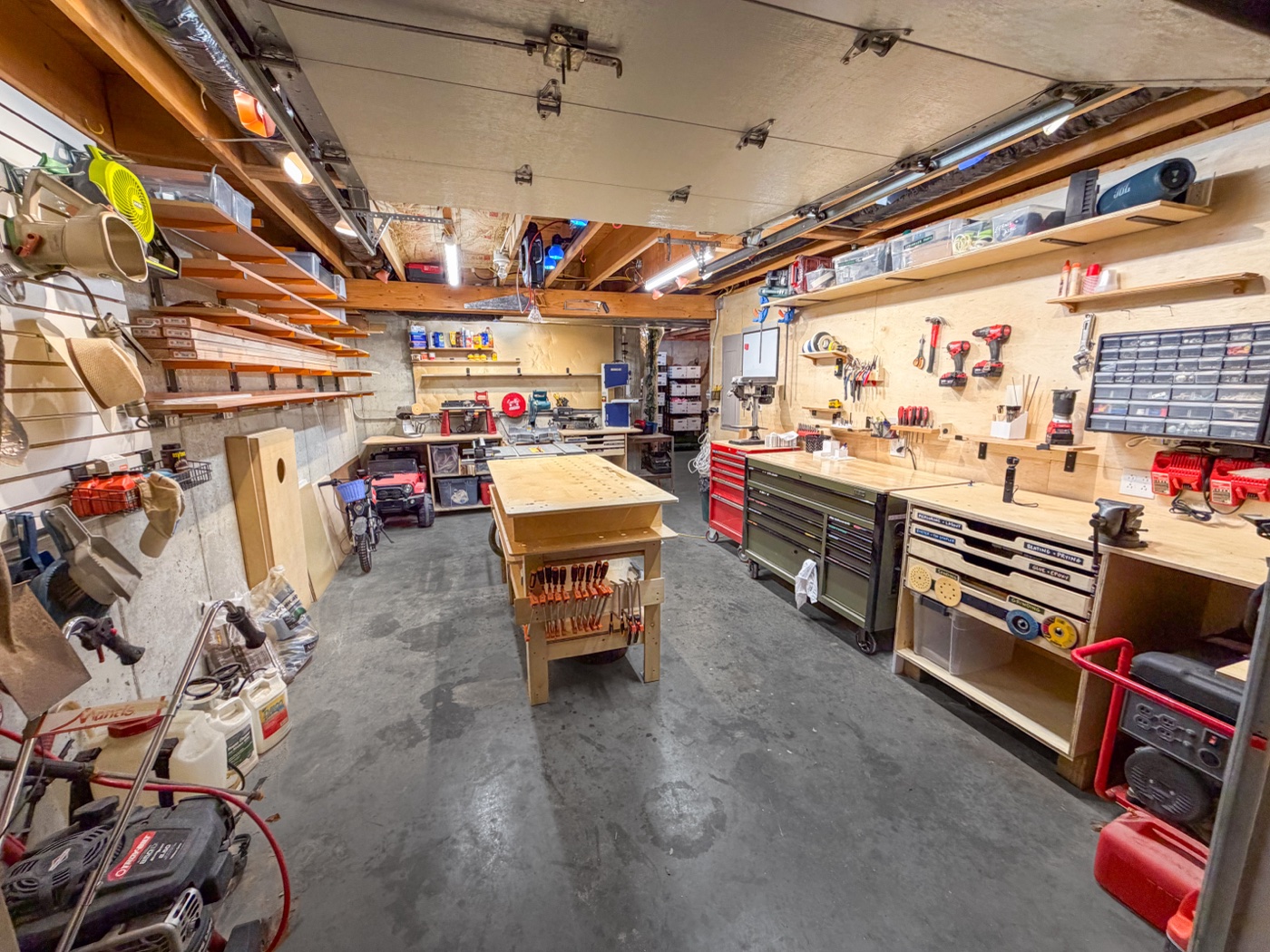
Multi-Function Garages: Let's pre-plan a zoning approach that lets your functions overlap in supportive ways. This helps avoid a tangled mess of hobbies that often becomes knotted up over time and hard to undo.
On-Site Custom Builds: I'll bring my mobile workshop with tools & supplies to help you make quick work of the project. Slatwall installs, custom shelves and brackets, etc. (Think "on-site usability designer who brought his mobile workshop.")
The most effective solution will rely on studying you and your space, so book a call and that's where we'll start.
Book a Zoom callTiny Functionated Spaces
The thinking behind the work
Your workshop is an interface
for getting things done.
A few principles I build by
Design principles for spaces that think.
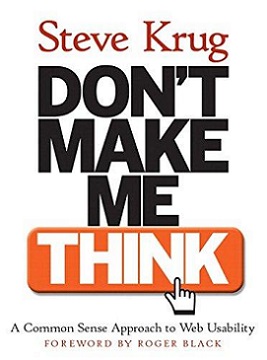
My approach to workshop design is largely rooted in principles from the UX web design world, notably influenced by the book Don't Make Me Think by Steve Krug.
Designing workshops that "think" isn't actually about designing intelligent workshops. Rather, it's about intelligently designing workshops that leverage (and grow) our subconscious minds.
Let the shop do the thinking.
You never think about whether or not you have bananas. Their color and shape coordinate with your subconscious mind the moment you glance at the counter, to instantly reveal whether you do (or don't!) have bananas. Your workshop can team up with your subconscious mind in similar ways. For example, see my video: Measuring Tapes are Yellow.
Opportunity Cost of Space.
Too often, we think of our workspaces as a puzzle, putting stuff where it fits, rather than putting it where it's the best use of that particular space.
By viewing our spaces as limited resources & treating it like money, we can inject fluency into our spaces in surprising areas. For some examples, see my video Opportunity Cost of Space.
Maximize Visibility in Unexpected Ways.
Visibility is a popular topic in a workshop, but I believe we're completely missing some opportunities to unlock its potential. Often, we only keep things visible that we use frequently. But we can expandd our minds & increase fluency of our workshops by also making things visible that we need to use frequently, as well as things we don't even understand.
For examples of the 3 types of things I keep visible in my workshop, see my video 3 Things Visible.
Avoid Technical Debt / Empty Space Design
One of our most unforgiveable workshop sins is that we build for NOW, and ignore TOMORROW. Therefore, we build drawers for the stuff we have now, but not for the stuff we'll have tomorrow. We design spaces for the stuff we do now, but not for the stuff we'll be doing tomorrow.
Empty space design is wildly important for enabling the day-to-day dynamics of using our spaces, as well as encouraging long-term evolution of our spaces.
"I skate to where the puck is going to be, not where it has been." - Wayne Gretzky
Every user & workshop is different. I’ll learn how you work, what you build, and where your space fights you—then I’ll help you find a way to make your workshop work for you.
Let’s Study You & Your SpaceWatch. Learn. Build.

Wicked Fast Workshop Drawers
“Omg so freaking simple!!”
— Shelby
Drilling Holes with your Table Saw
“OHH thats sweet, will make some of these.”
— Wintergatan
COMPLETELY OCD LED Candle (Looks, Lights, Flickers, Blows Out, & Smells Like the Real Thing)
“Please sell these. I'm stupid but I have money.”
— razcalkingNow Available: KTG Sculpt Sanders!
Slow & Torquey sanding for seriously scrupulous sculpting.


